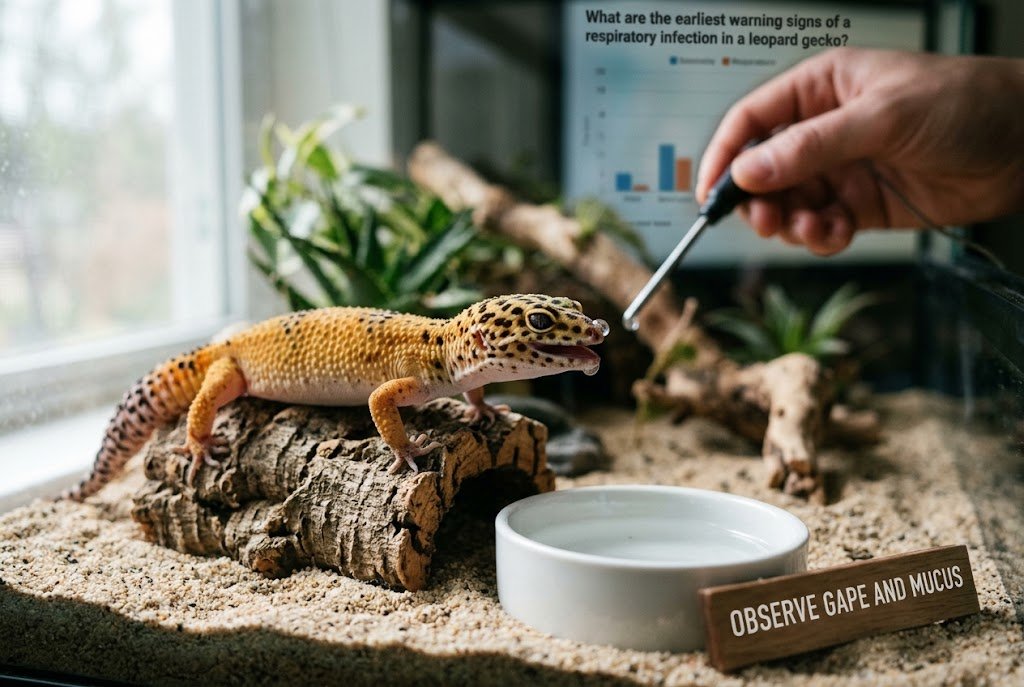
Since leopard geckos are capable of concealing symptoms of illness until the respiratory disease is already Warning Signs quite severe, regular close observation is crucial in determining the health status of the geckos. Illnesses of this particular kind not only result in breathing troubles but may also cause the reptile to feel generally unwell. In the first place, one notices these early physical changes very gradually. At such a point, a gecko will start to appear less active or will start to exhibit altered breathing. The geckos may start seeking the warmest spots in their habitat even when such behavior is not normally required from them.
The first symptoms of a bacterial respiratory disease in leopard geckos could be weird respiration sounds and running nose. The presence of open-mouth breathing and more pronounced efforts to breathe indicate a higher gravity of the condition. The Manual on Veterinary Medicine by Merck points out that nasal secretions and difficult breathing are very popular signs of pneumonia in reptiles.If you can spot your gecko’s signs of being affected with breathing disorders, then the chance of you giving the timely help increases. Breathing in and out silently with a lot of activity is normal for a healthy leopard gecko. Any sudden change should prompt you to give it more attention. Breathing disorders may have severalreasons.With a doctor who can treat exotic creatures, the cause for the issue can be diagnosed and the correct treatment for the gecko can be suggested.
Changes in Breathing
So, one of the ways you can detect a problem is a major change in breathing when he is at rest. His breathing gets quite erratic, and you can also see the body expand and contract quite a bit at each of the breaths. A faster rate of breathing usually does not mean there’s an infection. The gecko’s temperature and how much activity it does will be able to affect its breathing pattern. For example, a gecko that has been moving in the enclosure might breathe differently for a short time. The concern increases when unusual breathing continues during rest. Watch your leopard gecko when it is calm. Look at the movement of the throat and body. Notice whether breathing appears smooth and regular. A persistent change should not be ignored. Respiratory disease can cause rapid or difficult breathing in animals.

Nasal Discharge
Check the nose during normal handling. Avoid repeatedly disturbing the gecko. Take note of any discharge that returns after cleaning. A photograph can help you show the change to your veterinarian. The appearance and progression of discharge can provide useful information during a veterinary examination.
Open-Mouth Breathing
Open-mouth breathing is more concerning than a simple change in breathing speed. A leopard gecko may open its mouth when breathing becomes difficult. Reptiles with respiratory infections can develop difficulty breathing. The Merck Veterinary Manual identifies open-mouth breathing as a frequent sign of respiratory disease in reptiles.
Unusual Sounds
A healthy leopard gecko should not normally produce obvious respiratory sounds while resting. Clicking or unusual noises can signal an airway problem. You may hear sounds during inhalation or exhalation. Some owners describe these sounds as wheezing or faint crackling.
Respiratory sounds should be considered alongside other symptoms. A single unusual sound may have another explanation. Repeated sounds combined with discharge or breathing difficulty are more concerning. Listen when your gecko is resting quietly. Keep the room calm during observation. Do not make loud noises to force a reaction.
Less Activity
l. It may remain inside a hide for longer periods. It may show less interest in exploring the enclosure. Reduced activity is not specific to respiratory disease. Leopard geckos naturally spend significant periods resting. Activity can also change during shedding or after environmental changes. The important factor is a noticeable change from the gecko’s normal pattern.
Observe activity over several days. Compare current behavior with your gecko’s usual routine. A sudden decrease deserves closer attention. Reduced activity combined with breathing changes can strengthen the need for veterinary assessment.
Signs Worth Watching
Look for the following signs during normal observation.
- Breathing appears faster than normal while resting.
- The gecko repeatedly opens its mouth while breathing.
- Mucus appears around the nostrils.
- New sounds occur during breathing.
- Normal activity decreases without an obvious reason.
- Food interest becomes noticeably lower.
They show that something may need closer attention. Respiratory disease can have infectious and noninfectious causes. A veterinary examination is needed for an accurate diagnosis.
Frequent Throat Movement
Unusual throat movement can sometimes become noticeable when a gecko is having respiratory trouble. The throat may appear to move more often than normal. You may also notice repeated swallowing motions. This sign should be considered with other changes. Throat movement alone does not confirm infection. A gecko may make occasional movements during normal activity. Look for repeated behavior during quiet periods. Record how often it happens. Pay particular attention if throat movement appears with nasal discharge or unusual breathing sounds. These combined observations can provide useful information for a veterinarian.

Weakness
- Reduced Activity
If a leopard gecko becomes less active, that is usually because it is experiencing weakness. It will probably move slower and stay resting in the same spot longer. You will probably see it showing less interest in running about, exploring, or reacting to its environment. Changes will become more obvious if a gecko has breathing difficulties for a long time.
- Possible Causes
Weakened energy levels could not only be attributed to the development of a respiratory disease in your exotic pet leopard gecko. A deficiency in nutrients can indeed be the reason behind a drop in energy and the lack of activity. The wrong ambient temperature or humidity in the enclosure can also be causes of sluggishness in the reptile. Other health problems may cause similar changes. This is why weakness should be considered along with other symptoms.
- Weight Loss
Weight loss is another change worth monitoring. A sick leopard gecko may eat less than usual. Continued appetite problems can eventually affect body condition. Use a small digital scale to monitor weight when appropriate. Record the weight at regular intervals. Sudden or continuing weight loss should be discussed with a reptile veterinarian. Weight loss does not automatically indicate respiratory disease. Parasites and digestive problems can also cause changes in body condition. The combination of weight loss with respiratory symptoms is more important than either sign alone.
Daily Checks
A short daily health check can help you identify changes before they become severe. You do not need to disturb your gecko constantly. Observation from outside the enclosure can provide useful information.
- Observe activity levels during normal awake periods.
- Monitor appetite and feeding interest.
- Check body condition and weight when appropriate.
Poor Environment
The enclosure environment can have an important role in reptile health. Leopard geckos need an appropriate temperature gradient and suitable housing. VCA recommends suitable housing and proper environmental care as part of leopard gecko husbandry. Check the enclosure temperature with reliable equipment. Review the heating setup regularly. Remove waste and replace soiled material. Make sure the enclosure has appropriate ventilation without creating harmful temperature conditions.Good husbandry cannot guarantee that an infection will never occur. It can support general health and reduce some environmental risks. If symptoms are already present, then veterinary advice remains important.
Related Warning Signs Table
| Warning Sign | What You May Notice | What It Can Indicate |
| Open-Mouth Breathing | The leopard gecko keeps its mouth open while breathing | Breathing difficulty or respiratory irritation |
| Wheezing Sounds | Clicking or wheezing sounds during breathing | Possible respiratory infection |
| Nasal Discharge | Moisture or mucus around the nostrils | Possible infection or irritation |
| Excessive Mucus | Mucus appears around the mouth or nose | Increased respiratory secretions |
| Frequent Sneezing | Repeated sneezing without an obvious cause | Nasal or respiratory irritation |
| Lethargy | Less movement and reduced activity | Illness or general weakness |
| Reduced Appetite | The gecko eats less or refuses food | A possible sign of developing illness |
| Unusual Breathing | Breathing appears faster or more difficult than normal | Respiratory distress that may require veterinary attention |
Stress and Illness
Stress can make health problems harder to manage. Changes in housing can disturb a leopard gecko. Frequent handling can also increase stress when the animal is unwell. Give a sick gecko a calm environment. Avoid unnecessary handling. Keep the enclosure routine stable. Make sure the animal has access to appropriate hiding areas. Stress is not proof of infection. It is simply one factor that can affect an animal during illness. Respiratory symptoms still need proper assessment. Do not assume that stress alone explains open-mouth breathing or persistent discharge.
When to See a Vet
Contact an exotic animal veterinarian when respiratory signs continue or become more noticeable. Early professional assessment can help identify the cause. Your veterinarian may ask about enclosure temperature and humidity. They may also ask about feeding habits and recent changes. A physical examination can help determine the possible location and cause of respiratory disease. Depending on the findings, the veterinarian may recommend diagnostic testing. Respiratory disease can require more than simple observation.Seek urgent veterinary care when breathing appears difficult. Open-mouth breathing is especially concerning in a reptile.
Prevention and Care
Prevention starts with consistent husbandry and regular observation. Fresh water should remain available. VCA recommends clean fresh water and appropriate nutrition as part of leopard gecko care. Good care does not replace veterinary treatment when symptoms appear. It does provide a healthier foundation for your gecko.
Pay attention to small changes. A quieter gecko may be showing an early health problem. A small amount of discharge can become more significant when it continues. Changes in breathing deserve particular attention because respiratory disease can progress. If you notice repeated breathing changes or other warning signs, then contact a qualified reptile veterinarian. Describe every symptom clearly. This can help the veterinarian understand what you have observed.

Conclusion
Nasal discharge can also provide an important clue. Reduced activity and appetite changes may occur alongside respiratory signs.Open-mouth breathing and obvious breathing difficulty deserve urgent attention. Unusual respiratory sounds should also be taken seriously when they persist. Environmental problems can contribute to respiratory disease in reptiles. Proper temperature and cleanliness are therefore important parts of routine care.
If you would like to ensure your leopard gecko is in good health, your best bet is to be very observant and also seek advice from a professional vet. A vet won’t base your LP on symptoms alone since various diseases can show up with the same signs. A vet that treats reptiles can run tests on a gecko and will probably be able to give their prognosis and prescribe a suitable course of treatment if needed.In case you are worried about your gecko, call an exotic animal veterinarian in your area. They will need your description of the symptoms and details about the living condition of your gecko.
FAQs
What is the first sign of respiratory infection in a leopard gecko?
A change in normal breathing can be an early warning sign. Nasal discharge or unusual breathing sounds may also appear. Watch for changes that continue while the gecko is resting.
Can poor enclosure conditions cause respiratory problems?
Low ambient temperatures and poor enclosure conditions are major causes of respiratory diseases in reptiles, and especially so for leopard geckos.
Can a leopard gecko recover from a respiratory infection?
Healing depends on what caused the infection and how sick it was. With proper vet treatment and a good enclosure environment, a leopard gecko may recover. Do not treat your pet with medications you bought at a store without the help of a vet or at least an online consultation.
When should I take mine to the vet?
You will need to consult a vet if respiratory symptoms show up or get worse. For signs such as open-mouth breathing or signs that he is having difficulty in breathing, the pet should be brought to the clinic urgently. These symptoms can signify a major health threat that must be dealt with immediately.
When should I contact a veterinarian?
Contact a veterinarian when respiratory symptoms persist or become worse. Seek urgent care for open-mouth breathing or obvious breathing difficulty. These signs can indicate a serious problem that needs prompt attention