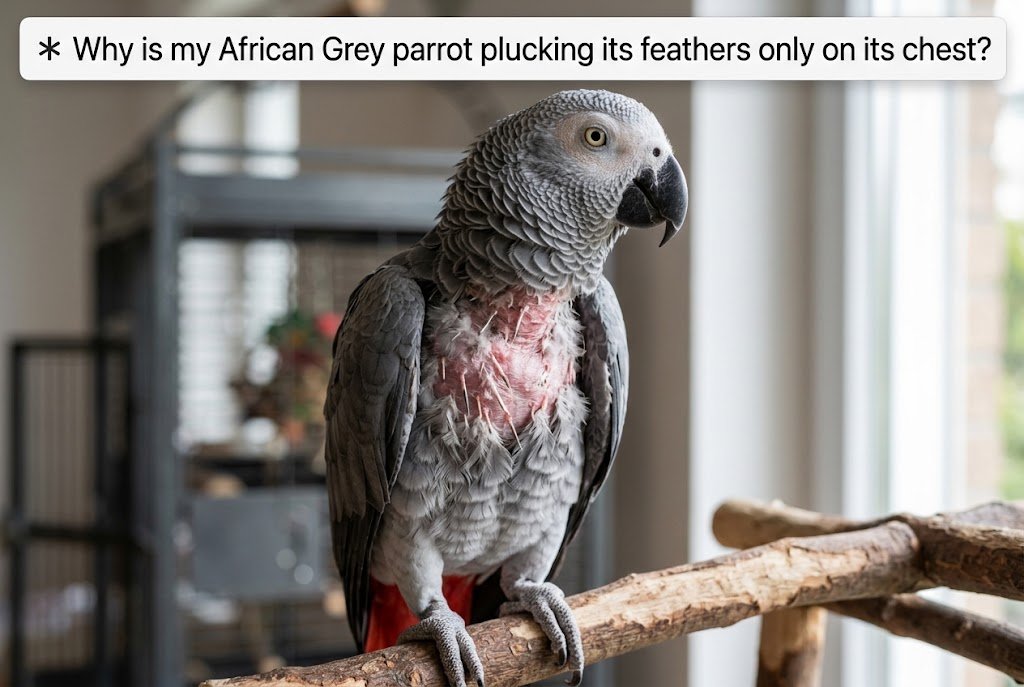
If your African Grey parrot is plucking feathers only from its chest, then the pattern deserves African Grey attention. Feather loss in one area can have several possible causes. Some causes are linked to skin irritation or pain. Other causes can involve stress or boredom. Nutrition can also affect feather health. Chest feather plucking does not always mean that your parrot has a behavioral problem. Medical causes should be considered before assuming that stress is responsible. Veterinary sources explain that feather damage can result from infections. It can also involve parasites or nutritional problems. Liver disease and other internal conditions may also contribute to feather damage. A proper examination can help identify the reason for the change.
Why Only the Chest?
If the skin feels irritated, then your African Grey may focus attention on that location. A local problem can therefore create a very specific pattern of feather loss.A localized area can sometimes point toward an underlying physical problem. The Merck Veterinary Manual notes that certain medical conditions can cause localized feather plucking. Masses and skin inflammation are examples that need veterinary attention. This does not mean that every bald chest area is caused by disease. It means that the location of the damage can provide useful information during an examination. The way the feathers look can also provide clues. Broken feathers can suggest chewing or picking. Whole feathers can be more consistent with normal shedding.

Skin Irritation
Skin irritation is one possible reason for chest feather plucking. A bird may react to itching or discomfort with repeated preening. Skin infections can affect feather follicles. Poor bathing habits can also influence feather condition. Some products used around the bird can create irritation. Hand creams and skin products can transfer to feathers during handling. A product that seems mild for people may not be suitable for a parrot. A veterinarian can determine whether the skin needs treatment.
Stress and Anxiety
Stress is another important factor in feather-destructive behavior. A stressful environment can affect their behavior. Changes at home can sometimes trigger unusual grooming. A new person can change the household routine. A new pet can also create fear. Moving the cage can cause uncertainty. Long periods of isolation may increase frustration. Feather picking can occur along with fear and aggression. Try to observe what happens before your bird starts plucking. Look for repeated patterns. Your parrot may pluck after you leave the room. It may happen during quiet periods. It may also happen after a stressful event. These observations can help identify possible triggers.
| Possible Reason | What to Look For | Helpful Action |
| Feather Plucking | Bare or thinning feathers on the chest | Monitor the area and consult an avian veterinarian |
| Skin Irritation | Redness dryness or frequent scratching | Check for skin problems or parasites with a vet |
| Stress or Anxiety | Plucking after changes in routine or surroundings | Keep a stable routine and provide enrichment |
| Boredom | Plucking when the parrot has little activity | Add safe toys foraging activities and interaction |
| Nutritional Issues | Poor feather quality or an unbalanced diet | Provide a balanced diet with veterinary guidance |
| Hormonal Behavior | Plucking during periods of hormonal changes | Reduce hormonal triggers and discuss concerns with a vet |
| Medical Problems | Persistent plucking or changes in appetite and behavior | Arrange a veterinary examination to identify the underlying cause |
Boredom and Lack of Activity
Boredom can be a major concern for African Grey parrots. These birds need regular mental stimulation. Foraging can make feeding more interesting. Safe chewing materials can give the beak useful work. Training sessions can provide mental stimulation.
Improve Daily Enrichment
A richer daily routine can help reduce boredom. Safe wooden toys can support chewing. Training can provide positive mental work.
Useful enrichment ideas include:
- Offer safe wooden toys for chewing.
- Hide small portions of suitable food for foraging.
- Rotate safe toys to keep the environment interesting.
Natural branches and suitable toys can also support activity. Enrichment should match your bird’s personality. Some African Greys enjoy puzzles. Others prefer chewing or climbing. Some enjoy learning sounds and simple behaviors. Watch your bird closely and use activities that encourage calm engagement.
Check the Diet
- Proper Nutrition
Nutrition helps feathers to remain healthy. A poor diet can result in bad skin and feathers. A diet consisting mainly of seeds may not provide proper nutrition to birds.
- Important Nutrients
Gray African parrots need to have their diet designed to keep them healthy, and formulated diets have been created to help them do this. Because full diets may also include vegetables and other products, exact recipes depend on each particular bird. The important nutrients needed are vitamin A and protein.
- Review the Environment
The environment around your African grey can affect feather health. Humidity can influence skin comfort. Natural light can support normal daily rhythms. Sleep is also important for parrots. A cage placed in a busy area may also make rest difficult. Household activity should not prevent your bird from having a calm sleeping period. Aerosol products should not be used around birds. Cooking fumes can also be dangerous. Check the cage location and the air quality around your parrot.
Consider Hormonal Behavior
Some parrots become more territorial during hormonal periods. They may defend their cage more strongly. They may also show increased vocalization or changes in social behavior. Feather damage can appear alongside these changes. Avoid touching the back or body in a way that encourages reproductive behavior. Gentle head and neck interaction is often more appropriate. Watch for nesting behavior or strong attachment to objects. Hormonal treatment should never be started without veterinary guidance. A veterinarian can decide whether reproductive behavior is relevant to the feather problem.
Rule Out Medical Problems
Medical problems should be considered when feather loss appears suddenly or becomes worse. A veterinarian may examine the skin and feather follicles. Blood testing may also be recommended. Fecal testing can help investigate certain infections or parasites.Other tests may be needed depending on the symptoms. X-rays can help investigate internal problems. Skin testing can help identify infections. Feather testing may also provide useful information.
Possible medical causes can include:
- Skin infections that cause irritation.
- Nutritional deficiencies that weaken feather growth.
- Parasites that damage the skin or feathers.
- Internal disease that causes discomfort.
- Feather disorders that affect normal growth.
- Viral disease that causes abnormal feather development.
VCA explains that feather loss can have infectious and internal medical causes. Diagnostic testing can help separate disease from behavioral feather damage. A medical examination becomes especially important when the skin is red or injured. Bleeding and open wounds need prompt veterinary attention. A bird that seems weak or stops eating also needs urgent care.
Watch for Warning Signs
Chest plucking should not be ignored when other symptoms appear. Your African Grey may be dealing with more than a behavioral habit. Changes in appetite can indicate illness. Reduced activity can also be important.
Watch for these warning signs:
- Red or swollen skin under the missing feathers.
- Bleeding or open wounds on the chest.
- Sudden loss of many feathers.
- Abnormal feather growth after molting.
- Changes in appetite or drinking.
- Weakness or unusual quiet behavior.
African grey parrots can be affected by serious conditions that influence feathers and overall health. PBFD is one example of a viral disease that affects parrots. African grey parrots can show generalized illness with this infection. Do not assume that every feather problem is PBFD. Many other causes are possible. A veterinarian can decide whether testing is appropriate. Early attention can also prevent secondary skin damage from continued picking.
Support Healthy Feather
Healthy feather growth requires good general care. A balanced diet supports normal development. Regular bathing can encourage normal preening. The suitable bathing routine depends on the individual bird.Make sure your parrot has access to clean water. Use safe bathing methods that your bird accepts comfortably. Never force a frightened bird into water. Some birds prefer gentle misting. Others enjoy a shallow bathtub. Good care also includes regular veterinary checkups. If the bird improves, then you may not know which change helped.
When to See a Veterinarian
This is especially important when the behavior is new. A professional examination can help rule out medical causes before a behavioral explanation is accepted. Your veterinarian may ask about diet and daily routine. They may ask when the plucking started. They may also ask about recent changes in the home. Information about sleep and bathing can also help.There is no single test that explains every case of feather plucking. Behavioral treatment often works best after medical problems have been investigated. Such products can create additional stress or injury when used incorrectly. VCA recommends that avian restraint collars only be used under veterinary supervision.
Conclusion
African Grey parrots that only pluck feathers from their chests may be responding to discomfort and irritation, along with possible stress. Boredom or solitude can also result in the destruction of feathers. Their diet and living conditions can also impact their feathers. The location of the plucking can be helpful in gathering details about the concern. Disease can make the parrot focus on a certain area, but bird behavior may just make it choose easy-to-reach areas.Be sure to examine the broader picture. Include the feeding routine and dietary habits. Re-evaluate the conditions in the cage and sleeping time. Make sure to ensure safe stimulation and invite people to interact with the bird. In any case, help from a veterinarian should be sought when it seems impossible to recover the feathers.
F A Q
Why is my African Grey plucking only its chest?
The chest is easy for an African grey to reach. Local skin irritation can cause focused plucking. Stress and boredom can also create this pattern. Medical causes should be ruled out when feather loss continues.
Can stress cause chest feather plucking?
Yes. Stress can contribute to feather-destructive behavior in parrots. Changes in the home can create anxiety. Isolation can also affect behavior. A stable routine and suitable enrichment may help.
Is the food consumed responsible for the loss of feathers?
A bad diet is detrimental to both feather health and the health of the skin. Diets consisting mostly of seeds are often deficient in necessary food elements. An avian vet can help you analyze your parrot’s diet and suggest ways to modify it to ensure better feather formation.
Should I take my parrot to a veterinarian?
Yes, if the plucking continues or becomes worse. Veterinary care is especially important when there is redness or bleeding. Changes in appetite or activity also need attention. A professional examination can help identify medical causes.
How can I help stop feather plucking?
Start with a veterinary assessment. Then review nutrition and environmental conditions. Add safe enrichment and foraging activities.