

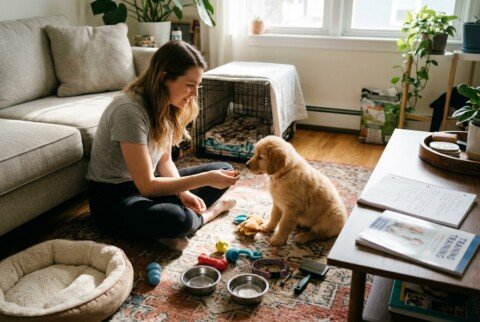
Training a puppy at home starts the very second you carry that wiggly bundle of fur through your front door. It is about building a bond while teaching your new friend how to live in a human world. You do not need a professional trainer to get great results if you stay calm and kind.
The secret to success is using small steps and lots of treats. Puppies have short attention spans, so keep your sessions under five minutes. If you practice simple things like sitting or waiting for a bowl of food every day, your dog will learn fast. Consistency is your best friend when you are teaching a young animal.
Start with the basics of puppy potty training
Potty training is often the hardest part for new owners. Most puppies need to go outside every two hours during the day. You should take them out right after they wake up, after they eat, and after a big play session. If you wait for them to tell you they need to go, it might be too late.
Pick one spot in your yard and take them there every single time. When they finally go, give them a tiny piece of boiled chicken or a happy rub on the head. Use a word like “potty” so they learn to associate the action with the sound. My neighbor, Sarah, used a bell on her door, and her Golden Retriever learned to ring it in just three days. It takes patience, but they will get there.
Accidents will happen in the house, and that is okay. Never yell at your puppy or push their nose into a mess. They won’t understand why you are angry, and it might make them scared of you. Just clean it up with a special spray that removes the smell so they don’t go there again. If your puppy seems to be having accidents constantly, it is a good idea to see a vet to make sure they do not have a bladder infection.

Teaching your puppy to sit and stay
The “sit” command is the foundation for almost everything else. Hold a small treat right in front of your puppy’s nose. Slowly move your hand back over their head toward their tail. As their nose goes up to follow the treat, their bottom will naturally go down. The moment their bottom hits the floor, say “yes” and give them the snack.
Once they sit reliably, you can move on to “stay.” This requires a lot of self-control for a young Dog who wants to jump and play. Start by asking them to stay for just two seconds. Take one step back, then step forward and reward them. If they move, do not get frustrated. Just start again and make it easier by staying closer to them.
I remember training my first puppy, Max. He was so excited he would just spin in circles. I found that doing training right before dinner worked best because he was focused on the food. Using a high-value treat, like a tiny bit of cheese, can make a huge difference when they are learning something new. You can find more tips on building a bond during these early days in this guide on How to Help a Scared Rescue Dog Build Trust since many of the same gentle methods apply.
How to stop puppy biting and nipping
Puppies explore the world with their mouths, which means your hands and shoes are at risk. Those little teeth are sharp! When your puppy nips your hand, make a high-pitched “ouch” sound. Stop playing immediately and turn your back for thirty seconds. This teaches them that biting makes the fun stop.
Always have a toy nearby to give them instead of your hand. If they start gnawing on your fingers, gently slide a rubber toy or a soft rope into their mouth. We want to show them what they are allowed to chew. My cousin had a puppy that loved to bite ankles, so she started carrying a toy in her pocket at all times to distract him.
Teething can also make biting worse. Puppies lose their baby teeth just like humans do, and it hurts. Giving them a cold washcloth to chew on can help soothe their sore gums. If the biting seems aggressive or if the puppy is growling in a way that feels scary, talk to a professional trainer or your vet for extra help. Most of the time, it is just normal puppy behavior that they will outgrow with your help.
Walking on a leash without pulling
Many puppies turn into tiny sled dogs the moment you put a leash on them. They want to smell everything and run everywhere. Start practicing inside your house where there are no distractions. Put the collar and leash on and just let them walk around with it dragging behind them for a few minutes so they get used to the feeling.
When you start walking together, keep the leash loose. If the puppy pulls, stop walking and stand still like a tree. Do not pull back, just wait. When the puppy looks back at you or moves toward you to see why you stopped, the leash will go slack. Give them a treat and start walking again. This teaches them that a tight leash means “stop” and a loose leash means “go.”
Walking should be a happy time for both of you. Use a use if your puppy pulls a lot to protect their neck. I used to take my puppy to a quiet park at 6:00 AM when nobody was around. This helped him focus on me instead of squirrels or other dogs. You can learn more about general puppy training and care by checking out our other helpful articles on pet behavior.
The importance of socialization at home
Socialization does not just mean meeting other dogs. It means getting your puppy used to all kinds of sights and sounds. At home, you can help them feel brave by showing them things like the vacuum cleaner, umbrellas, and hats. Turn the vacuum on in another room first so the loud noise doesn’t scare them too much.
Invite friends over to meet the puppy, including people of different ages. Ask your guests to give the puppy a treat so your dog learns that strangers are wonderful. If your puppy hides, do not force them to come out. Let them move at their own pace and reward them for being brave. This builds a confident adult dog who isn’t afraid of the world.
Think about the sounds your puppy will hear every day. You can play recordings of thunderstorms or fireworks at a very low volume while your puppy eats. This helps them stay calm when the real sounds happen later. A well-socialized puppy is much easier to live with because they won’t bark at every little thing that changes in their environment.
Creating a safe space with crate training
A crate is not a cage for punishment. It should be a cozy bedroom where your puppy feels safe. Put a soft blanket and a few safe toys inside. Leave the door open at first and toss treats inside so the puppy goes in on their own. Never force them in, or they will learn to hate it.
Feed your puppy their meals inside the crate with the door open. Once they are comfortable eating there, try closing the door for one minute while they eat. Slowly increase the time they spend inside while you are still in the room. This helps with potty training because dogs usually do not like to mess where they sleep.
My friend used a crate for her lab puppy every night, and now that dog goes into his “room” whenever he wants a nap. It gives the puppy a place to rest when the house gets too busy. If your puppy cries for more than a few minutes, they might need to go potty. But try to wait for a tiny gap in the crying before letting them out, so they don’t think crying is the way to get what they want.
Setting a daily routine for success
Puppies thrive when they know what to expect. Try to feed them, walk them, and train them at the same time every day. This helps their body get on a schedule, which makes potty training much faster. A tired puppy is a well-behaved puppy, so make sure they have plenty of time for play and exercise.
Include nap times in your schedule too. Puppies need a lot of sleep, sometimes up to 20 hours a day! If your puppy starts acting extra “naughty” or biting more than usual, they might just be overtired. Putting them in their crate for a quiet nap can change their mood completely. It is just like a toddler who needs a rest after a long day of playing.
Remember that every puppy learns at a different speed. Some will get the hang of things in a week, while others might take a month. Stay patient and keep your voice light and happy. If you ever feel overwhelmed, take a break. Training should be a way to show your puppy you love them and want them to be part of your family for a long time. What is the one thing your puppy has learned that surprised you the most?


What Dogs Should Never Eat: Foods That Harm Dogs - Pet Guide Hub
[…] How to train a puppy at home without stress […]