

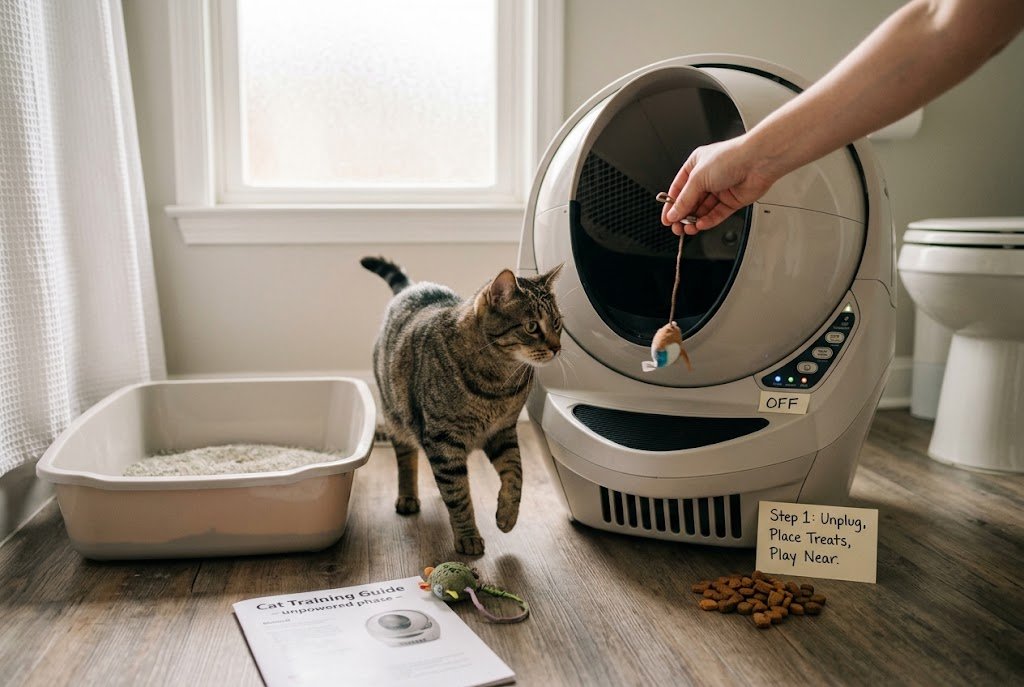
Cats can be frightened by the sudden change in a familiar object. An automatic self-cleaning litter box may appear strange Automatic Self and sound scary to a panicked cat. The unfamiliar moving parts and unfamiliar sound are a combination that can cause stress in pets. Some frightened cats might avoid the self-cleaning litter box altogether. Training a terrified cat can be done. The important thing is to get your pet used to the new product. This training can be slow-paced in order to reduce fear. This article will provide helpful information about training a terrified cat to tolerate an automatic self-cleaning litter box.
Understand Fear
Do not force your pet to enter the new litter box. This can cause more stress in cats. Giving your pet the opportunity to view the new object in a safe area can help reduce fear. Observe your animal’s body language. More time should be given if this happens.

Choose a Safe Spot
The placement in which you place the new litter box can matter. A feline may want to escape when the object is in a strange place. Therefore, it is advisable to set the fully automatic litter box in a place of comfort for your cat.
The new litter box should be removed from noisy gadgets such as washing or vacuum cleaners. An area of peace gives your cat minimum fright. Your pet should have an easy approach to the new litter box. Your cat must not have to go through a stressful area in order to use the new litter box.
Keep Familiar Litter
Some familiar scents can help a pet feel comfortable around a new object. Place the familiar litter near the new litter box. This can help the animal understand what the new box is. The familiar scent can make it easier for pets to get used to a new item. A familiar depth of litter can help reduce fear and stress.
Introduce It Slowly
. This allows your cat to investigate it at its own time. Your cat may sniff around the new box. This means the animal is getting used to the unfamiliar object. The old litter box should stay available during this process. Taking away the old box too soon can cause more stress. Your cat needs an exit if it does not feel comfortable.
Turn It Off
The moving parts of the self-cleaning litter box can cause fear in pets. Start slow by leaving the new item turned off. Let your cat use it like an ordinary litter box. This can help reduce stress for the pet. Your cat can get used to the new item without the unfamiliar noise and movement.
After the pet gets used to the new item, you can slowly introduce the automatic cleaning. Always follow the instructions for your automatic self-cleaning litter box. Some products may have different cleaning levels and safety features.
Use Positive Reinforcement
A small favorite treat can help encourage relaxation. Do not shout at the cat when it refuses to enter the new box. Avoid punishment. This can lead the pet to fear the new item even more. Punishment can also cause cats to avoid the litter box altogether.
Possible rewards could include:
- Small treats that your cat enjoys
- Praise when the animal approaches the new item calmly.
- Your favorite toys placed near the litter box
- Quiet attention when the cat approaches the box.
- Familiar bedding placed at a safe distance
- Extra playtime after the cat investigates the new litter box
- It is important to keep rewards simple and unobtrusive. The goal is to build a relaxed association with the new object.
Encourage Exploration
- Use Familiar Toys
. The cat will investigate the object in its own time. This may help create a relaxing association with the new item. Do not encourage the cat to enter the new box. Do not place the animal in the new litter box either. Let the cat approach the new box on its own time. This can reduce the chance of panic.
- Stay Nearby
Your presence can help calm a frightened cat. Sit near your pet as it explores the new automatic self-cleaning litter box. Speak softly if the animal looks towards you. Avoid making loud noises near the new box. Do not touch the new box while your cat is exploring it. Let your animal sniff around the outside. Some simple actions like this can help your cat associate a new item with relaxation.
- Give Enough Time
Some pets may take weeks to get comfortable with a new item. You can place treats near the new box when the animal is calm. The treats should be kept at a safe distance at first. Bring the treat closer if the cat becomes more confident. The new item just needs to become a familiar part of the environment.
Avoid Rushing Your Cat
Your cat will eventually associate the new item with a relaxed environment. Let your cat explore the new box as it wishes. You can reward calm behavior. Never force your pet into the new box. Doing this can create a negative association with the new item. Your pet may avoid using the new box for its toilet needs.
| Training Step | What to Do | Helpful Tip |
| Place the Box Nearby | Keep the automatic self-cleaning litter box near your cat’s current litter box. | Let your cat investigate it without pressure. |
| Keep It Turned Off | Leave the automatic function off at first. | This helps your cat become comfortable with the new box without unexpected sounds or movement. |
| Use Familiar Litter | Add the same type of litter your cat already uses. | Familiar smells can make the new box less intimidating. |
| Add Familiar Scents | Place a small amount of used litter in the new box. | The familiar scent can help your cat understand that the box is for toileting. |
| Reward Calm Behavior | Give treats or gentle praise when your cat approaches or investigates the box. | Reward curiosity without forcing your cat inside. |
| Keep the Old Box Available | Do not remove the old litter box immediately. | Give your cat time to choose the new box voluntarily. |
| Introduce the Cleaning Cycle Slowly | Once your cat regularly uses the box, gradually introduce the automatic cleaning function. | Start the cycle when your cat is away from the box. |
| Watch for Fear | Look for hiding, avoidance, hissing, or refusing to use the box. | If your cat becomes frightened, turn the automatic feature off and slow down the training process. |
| Maintain the Box | Clean the litter box and replace litter as recommended. | A clean, comfortable box can encourage continued use. |
| Be Patient | Some terrified cats may need several days or weeks to adjust. | Never force your cat into the litter box. |
Add the Motion
After the cat gets used to the new box, you can slowly introduce the automatic cleaning. Your cat should be allowed to get used to the machine with the motor turned off. You can place the new box in your cat’s room until the animal feels comfortable with it. Some machines offer volume settings for the cleaning function. The lowest possible setting should be used first. Let your cat hear the mechanical cleaning at a distance first.

Keep a Routine
Cats are often comforted by a predictable schedule. Try to keep a routine for feeding your pet. Play with your cat at regular times every day. Keep your pet’s sleeping area in the same spot. The old litter box should stay in the same spot during the training process. Changing the box’s location can create more confusion for the cat. This can affect your pet’s ability to get used to the new item.
10. Watch Behavior
Your cat can display signs of progress during the process. Your pet should be comfortable enough to investigate the new item. Regular use of the box is another sign that progress is being made. Stress can often be seen in pets.
Avoid Common Mistakes
Many problems during the process can be avoided by staying patient. Rushing the process can create a negative association with the new item. Placing the box in an enclosed corner can also cause stress in pets. The animal needs enough space to feel comfortable. The automatic cleaning should not be introduced too soon in the process.
Build Confidence
Confidence will naturally develop when a pet gets used to the new box. Keep rewarding calm behavior. Keep your voice soft when speaking to your cat. Avoid making sudden or large movements around the new box. Some cats can develop confidence with only a few sessions. Some terrified cats may take weeks of training before they feel confident. Every cat will take its own time to adjust to the new item.

Rewards can gradually be removed once your cat has developed enough confidence. Always observe your pet to see if there are any additional concerns. Know When to Get Help A qualified feline behavior professional can also provide help for pets with extreme cases of anxiety.
Final Thoughts
Using familiar litter can help it associate with the new item due to the familiar scent. The old litter box should be left available during the transition. Rewards should be given for calm behavior around the new box. Nevertheless, you must refrain from punitive action in this situation. After your feline acclimates to the new litter container, proceed to teach the animal about its locking system. Although the whole process may take days or even weeks to complete, it is crucial to keep in mind that the most important aspect to consider is ensuring your pet’s comfort around the new litter container.
FAQs
How long does it take to train a terrified cat?
Some animals can learn to investigate a new item after only a few days. Terrified cats may take weeks to adjust to a new object.
Should I leave the automatic litter box turned off?
You can introduce the automatic cleaning function after the animal gets used to the box.
Why is my cat afraid of the automatic litter box?
New objects or unfamiliar locations can also cause fear in pets. Some pets just need more time to adjust to unfamiliar objects.
Are treats permissible while teaching a cat to use the new litter box?
Using some small treats as a reward each time the cat acts calmly near the new box is acceptable; however, do not try to force the pet to approach the box because some pets feel nervous when food is placed around them.
What should be done if a cat does not want to use the new litter box?
The old litter box should be left available during the process. If the cat is not willing to go to the new litter box, the previous step may need to be repeated. If the situation remains the same, visiting a veterinarian is advisable since the cat’s refraining from using the new litter box may sometimes be a symptom of health issues.





Can a French Bulldog safely eat dragon fruit? 7689
[…] How Do You Train a Terrified Cat to Use an Automatic Self-Cleaning Litter Box? […]