


Dogs will eat almost anything they find on the floor, but common human foods can kill them. One grape or a tiny square of dark chocolate can send a healthy pup straight to the emergency clinic. Knowing which foods to hide away keeps your best friend safe every single day.
The short answer is simple: never feed your dog chocolate, grapes, raisins, onions, garlic, xylitol sweetener, macadamia nuts, alcohol, or bread yeast dough. If your pup swallows any of these, call your vet right away. Keep their bowl filled with safe dog treats instead.
Foods in Your Kitchen That Can Poison Your Dog
Most poison calls to animal clinics start right by the kitchen counter. You drop something while cooking dinner, your dog snaps it up in one quick gulp, and panic sets in. Some items cause an upset belly, but others shut down organs within hours.
Chocolate tops every list for a reason. It has two chemicals dogs cannot process: theobromine and caffeine. Dark baker’s chocolate is the most dangerous kind you can have in the house. Milk chocolate has less cocoa, but a whole candy bar can still make a small dog very sick.
Grapes and raisins are just as scary because vets still do not know the exact dose that causes harm. A tiny handful can cause sudden kidney failure in a big golden retriever, while another dog might just vomit. Never take that gamble. Keep trail mix, oatmeal raisin cookies, and fruit bowls far out of reach.
Onions, garlic, chives, and leeks belong to the allium family. They slowly destroy red blood cells in a dog, leading to severe anemia. Garlic powder is hidden in almost every jar of pasta sauce and meat rub. If your pup licks a clean plate of spaghetti, that small taste of garlic powder can do real damage over time.
You can find helpful tips on safe feeding by exploring the Pet Guide Hub family pet resource. Setting clear house rules for your family stops accidental treats before they happen.

What Should You Do If Your Dog Eats Something Bad?
Accidents happen even when you watch your pup closely. My neighbor once left a chocolate muffin on the coffee table, turned her back for thirty seconds, and found only crumbs on the rug. Her heart dropped, but acting fast saved her dog from a long hospital stay.
First, stay calm and remove any leftover food from their mouth. Check the packaging to see how much they ate and look at the ingredient list. Vets need to know the dog’s weight, the exact food, and when they swallowed it.
Call your family vet right away. If the clinic is closed, call the nearest 24-hour emergency animal hospital or a pet poison hotline. They can tell you if your dog needs medicine to bring the food back up before it digests.
Do not try to make your dog throw up at home unless a vet explicitly tells you how to do it. Giving household liquids like hydrogen peroxide can burn their throat or cause dangerous foam in their lungs. Always let a trained doctor guide your next step.
Hidden Killers: Artificial Sweeteners and Baked Goods
Some of the most dangerous foods do not look dangerous at all. Artificial sweeteners are now found in peanut butter, sugar-free gum, diet sodas, and baked treats. The worst one by far is xylitol, also called birch sugar on some modern food labels.
Xylitol makes a dog’s pancreas release a flood of insulin within minutes. Their blood sugar drops so low they can start shaking, collapse, or suffer seizures. In higher amounts, xylitol causes total liver failure. Always read the ingredient label on your peanut butter before you smear it into a chew toy.
Raw yeast dough is another silent threat during holiday baking. If a dog eats raw bread dough, the warm moist stomach works like an oven. The dough continues to rise, stretching the stomach until it cuts off blood flow. As the yeast ferments, it also produces alcohol directly inside your dog’s gut.
Alcohol hits a pet’s small body much harder than a human. Just a few sips of beer, wine, or spilled cocktail can cause dangerous drops in body temperature, breathing trouble, and coma. Keep party drinks on high tables when guests come over to visit.
If you are also working on basic manners around the kitchen table, check our guide on How to train a puppy at home without stress. Teaching a reliable “leave it” command keeps them safe when snacks fall on the floor.
Nuts, Seeds, and Salty Snacks to Avoid
We often think of nuts as healthy snacks, but dogs handle fats very differently than people do. High-fat snacks can trigger pancreatitis, a painful swelling of the pancreas that requires days of care at an animal hospital.
Macadamia nuts are especially toxic to any Dog breed. Eating just a few macadamia nuts makes a dog weak in the back legs, feverish, and unable to walk for up to two days. Walnuts and pecans can also harbor hidden molds that cause muscle tremors.
Salty snacks like potato chips, salted pretzels, and popcorn can cause problems too. Too much salt makes your dog extremely thirsty, but large amounts lead to sodium ion poisoning. Watch for signs like vomiting, diarrhea, stiff walking, and unusual thirst.
Fruit pits and seeds bring two different dangers into the home. Peach pits, plum stones, and apple seeds contain traces of cyanide. More commonly, large fruit stones get stuck in the small intestine, requiring emergency surgery to remove the blockage.
- Macadamia nuts cause leg weakness, shaking, and high body temperature.
- Peach, plum, and cherry pits can choke a dog or block their gut.
- Salty snacks lead to dangerous dehydration and stomach pain.
- Fatty meat trimmings and bacon grease can trigger severe pancreatitis.
- Cooked bones splinter easily and pierce the stomach wall.
Safe Human Foods You Can Share Instead
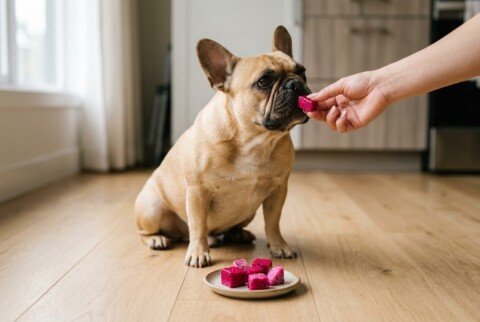
You do not have to ban all kitchen snacks from your dog’s life. Sharing healthy treats is a sweet way to bond, as long as you pick ingredients that nourish their body. Plain foods without butter, salt, or sauce are always the safest option.
Carrots are a wonderful treat because they are sweet, low in calories, and crunchy. Many dogs love chewing on cold raw baby carrots, which also helps scrape soft plaque off their teeth. Green beans are another great choice, especially for pups that need to watch their weight.
Plain cooked pumpkin does wonders for a dog’s digestion. A single spoonful can settle an upset tummy or firm up loose stools. Just make sure you buy pure canned pumpkin puree, not sweet pumpkin pie mix filled with holiday spices.
Apple slices make a crisp, refreshing treat on warm days. Cut the fruit into small wedges and remove every bit of the core and seeds first. Blueberries and seedless watermelon chunks are also packed with water and gentle vitamins that dogs enjoy.
Every Pet has a unique stomach, so introduce any new snack slowly. Give one small piece the first day and watch how their tummy reacts. If they get gas or loose stools, stick to their regular dog food instead.
Keep your emergency vet phone number on your fridge door right next to the shopping list. What safe snack does your dog love the most when you cook dinner?



Dangerous foods: What dogs should never eat to stay healthy - Pet Guide Hub
[…] What Dogs Should Never Eat: Foods That Harm Dogs […]